High-intensity exercise done late in the evening can suppress immune recovery and increase inflammation — especially in cancer survivors whose cortisol rhythms are already disrupted. The fix isn't doing less. It's matching intensity to timing: hard efforts earlier in the day, lighter movement in the evening, and at least four hours between intense exercise and bedtime. Here's the science behind why this matters and how to get it right.
Something Healthy That Can Quietly Become Harmful
You don't feel sick. Nothing hurts. Maybe you're a bit more tired than usual, but nothing alarming.
And yet, below the surface, a habit that's widely considered healthy may be weakening your immune defenses, increasing inflammation, and leaving your body less protected — especially after cancer.
For cancer survivors, a strong immune system isn't just about avoiding colds. It's one of the body's key defenses against recurrence. And when that system is quietly strained by something you'd never suspect, the consequences don't announce themselves. They accumulate.
The activity is exercise — but not exercise in general. A very specific kind, done at a very specific time.
Why Exercise Is Still One of the Most Powerful Tools After Cancer
Let's be clear first: physical activity is enormously beneficial during and after cancer. During treatment, it reduces stress, improves treatment response, helps counter therapy resistance, and protects against cachexia — a dangerous condition of progressive muscle wasting that affects nearly half of cancer patients.
After cancer, exercise is one of the strongest tools available to lower recurrence risk. That is well established.
But after cancer, the details matter. If you miss the nuances, the same healthy activity can place unnecessary stress on your immune system right when it's still trying to recover.
What Happens Inside Your Body During Intense Exercise
When you exercise hard, you breathe faster, your muscles demand more oxygen and fuel, and your body responds by releasing hormones — mainly adrenaline and cortisol.
Cortisol is the critical one here. It's the body's primary stress hormone, and it directly affects the immune system. The harder and longer you exercise, the more cortisol your body releases. That's normal — exercise is a form of voluntary stress.
But here's what surprises most people: the exact same workout can affect your immune system very differently depending on when you do it.
Your Internal Clock Decides Whether Exercise Helps or Hurts
This is where chronobiology enters the picture — the study of our internal clock and how the body's systems, including the immune system, function differently throughout the day.
Your body runs on a circadian rhythm. Cortisol is supposed to peak in the morning, giving you alertness and energy, then gradually decline through the afternoon and evening. By nighttime, cortisol should be low, allowing the body to cool down, shift into repair mode, and activate immune recovery during deep sleep.
When intense exercise happens late in the evening — right when the body is meant to be winding down — it forces cortisol back up. Core body temperature rises. Alertness spikes. The nervous system stays locked in stress response instead of switching into recovery mode.
A large study published in 2025, using biometric data from nearly 15,000 physically active adults tracked over a full year, confirmed exactly this pattern. When high-intensity exercise happened close to bedtime:
- Sleep onset was delayed
- Sleep duration decreased
- Resting heart rate at night was higher
- The nervous system stayed in stress response longer
The same study found that when intense exercise ended more than four hours before bedtime, sleep was not affected.
Why This Matters Far More for Cancer Survivors
If this happens once — dancing late at a friend's birthday — a healthy body handles it fine. But when sleep disturbances persist for days, research shows an increase in inflammatory markers and a reduced ability to detect and clear abnormal cells. Both are hallmarks of weakened immune function.
For cancer survivors, the stakes are significantly higher.
Human studies show that many cancer survivors across different cancer types have disrupted cortisol rhythms after treatment. The body's stress regulation system isn't fully balanced yet. And this matters because disrupted cortisol patterns are linked to immune imbalance, higher chronic inflammation, ongoing fatigue, and worse long-term outcomes.
Here's the mechanism: cortisol is supposed to suppress unnecessary inflammation — but only when it flows in its natural circadian rhythm. When that rhythm is broken, immune cells become less responsive to cortisol's anti-inflammatory signals. Instead of calming down, the system stays chronically irritated. Immune repair slows. Fatigue lingers. The body stays stuck in a low-grade fight-or-flight state.
That's why for cancer survivors — especially those struggling with fatigue or poor sleep — high-intensity exercise close to bedtime can push an already strained system further out of balance.
Is High-Intensity Exercise Even Safe After Cancer?
Yes — when done responsibly. The answer depends on two factors: duration and timing.
Short bursts of intensity with longer rest periods in between — known as HIIT (High-Intensity Interval Training) — are very effective for building cardiovascular health and endurance without the harmful effect of keeping cortisol elevated for too long. This is a fundamentally different stress profile than a long, exhausting session of sustained high effort.
And the benefits go beyond general fitness. A 2022 study revealed something remarkable: high-intensity exercise creates a kind of metabolic shield against wandering cancer cells that could otherwise form metastases. This shield doesn't form only in muscles. It develops inside internal organs — lymph nodes, liver, lungs. During intense exercise, these organs are reprogrammed to consume dramatically more glucose, creating a harsh, uninviting environment where cancer cells struggle to survive, leaving them more vulnerable to immune detection and elimination.
So intense exercise isn't just safe after cancer. It's actively protective — when the timing is right.
The Best Time to Exercise Intensely
Match intensity to your cortisol curve.
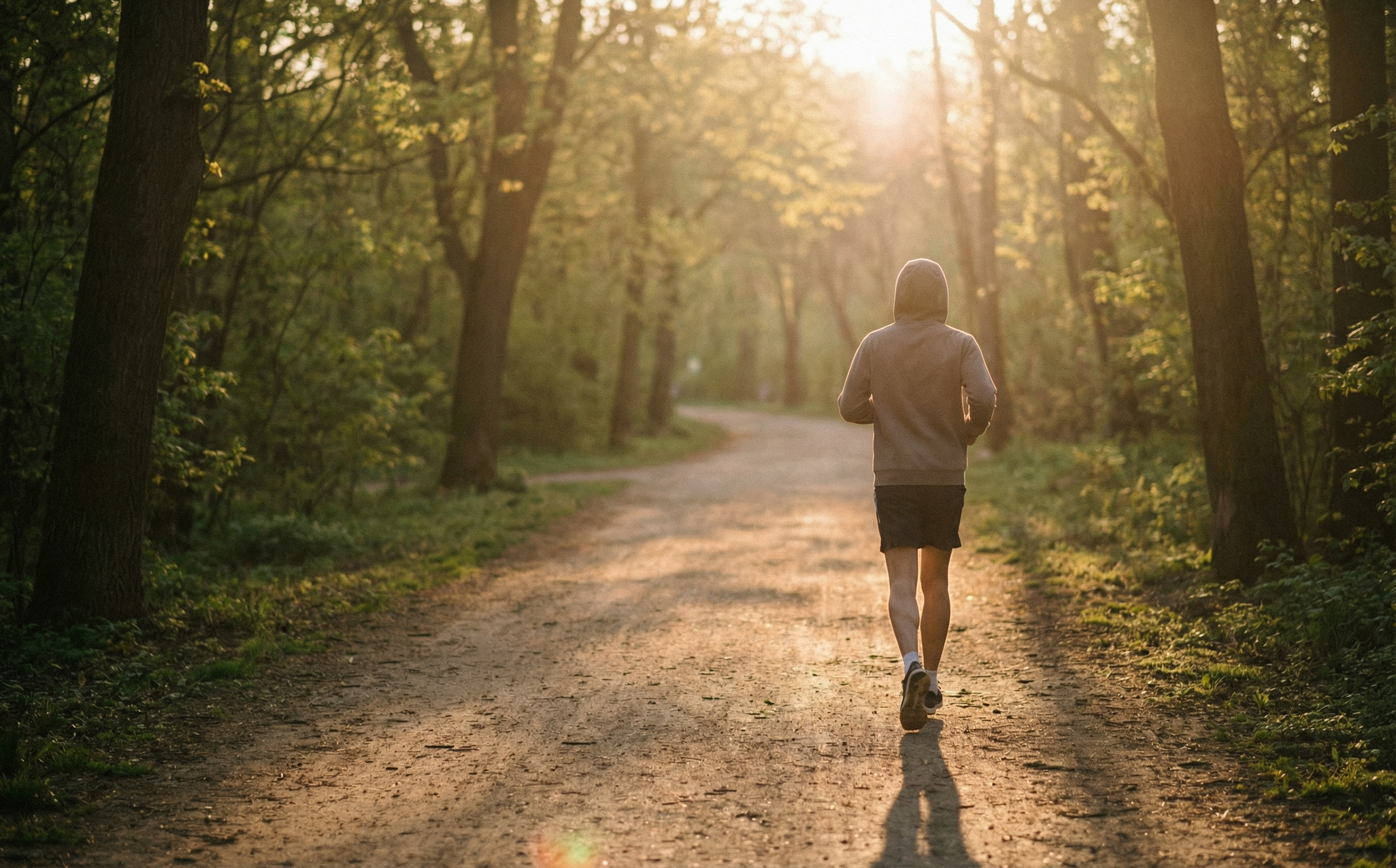
Cortisol is naturally higher earlier in the day. That's when your body is primed for effort, stress tolerance is highest, and intense exercise works with the circadian rhythm rather than against it. Morning is ideal.
In the evening, the body is meant to decelerate. Lower-intensity activities — a walk, gentle stretching, light yoga — support that transition instead of fighting it.
The four-hour rule from the 2025 study provides a clean, practical boundary: finish high-intensity exercise at least four hours before you plan to sleep.
A Simple Framework for Exercising Smarter After Cancer
Earlier in the day:
- High-intensity cardio and HIIT
- Short bursts of effort with recovery intervals
- Strength training
Within four hours of bedtime:
- Walking
- Light stretching
- Any activity where you can say a full sentence in the same breath — that's a reliable indicator of low-intensity effort
General principles:
- Short intense bursts over long exhausting sessions
- Match intensity to the time of day
- If you're dealing with persistent fatigue or poor sleep, be especially careful about evening strain
The Takeaway
The goal isn't to do less. It's to exercise smarter by matching workout intensity with your body's natural hormone rhythms. When you get the timing right, physical activity strengthens immune surveillance, lowers inflammation, and builds a metabolic environment that actively protects against recurrence.
When you get it wrong — not dramatically, not dangerously, just chronically off by a few hours — you can quietly drain the system you're trying to build.
Your body already knows when to push and when to recover. The only job is to stop overriding it.
I'm a biochemist and registered dietitian, but I'm not your dietitian. This article is for educational purposes only. Before changing anything about your routine, always check with a healthcare professional who knows your situation.